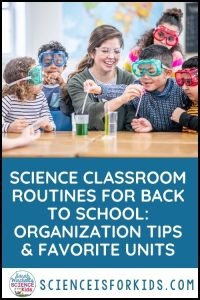
A new school year means a fresh chance to get your science block running smoothly from day one. Whether you’re teaching your first year of science or your fifteenth, a little organization up front saves hours of scrambling later. In this post, I will share my best science classroom routines, organizational tips, and a few of my favorite units to kick off the year.
Science Classroom Routines That Make the Year Easier
Routines are what let you spend your energy on teaching the content instead of managing the chaos around it. If you take the time to model what you expect during science lessons, then your routines will become automatic for the students. Here are my tips for teaching science classroom routines.
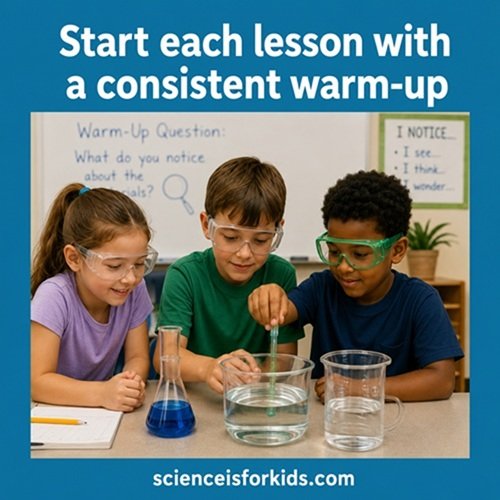
1) Start each lesson with a consistent warm-up.
One easiest science classroom routines to use is to start each lesson consistently. A quick “Science Starter” such as a picture, a question, or a quick vocabulary review signals to students that science time has begun and gets their brains in gear before the lesson starts. I often use one or two of my task cards associated with our unit as a starter just to get an idea of prior knowledge.
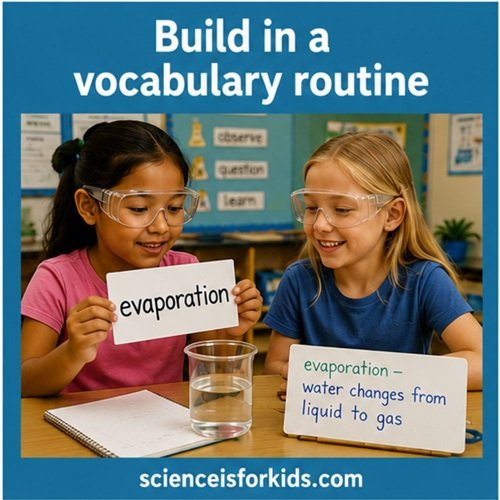
2) Build in a vocabulary routine.
You may think vocabulary is a reading skill, but it’s one of the most important of you science classroom routines. Science is vocabulary-heavy, and a consistent way of introducing and reviewing terms is essential for long term retention. With each unit, I recommend the following for vocabulary:
- science unit word wall as new words are introduced
- interactive notebook pages
- weekly review game like Scoot to help those words stick
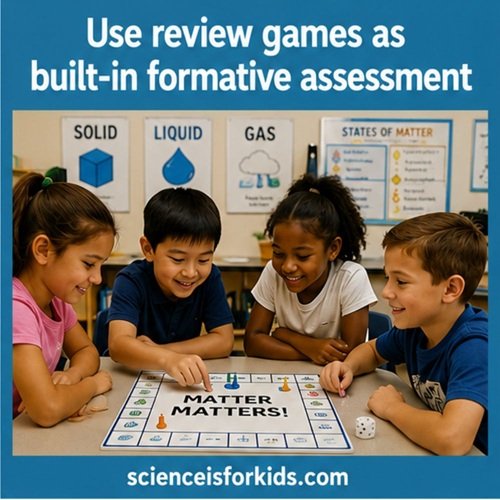
3) Use review games as built-in formative assessment.
Building motivation for learning is essential with science, and making learning science fun with review games is one of the science classroom routines that has big impact. A quick task card scoot or digital review game during and at the end of a unit does double duty. It’s genuinely a fun way to review, and it shows you exactly what needs to be re-taught before the final test.
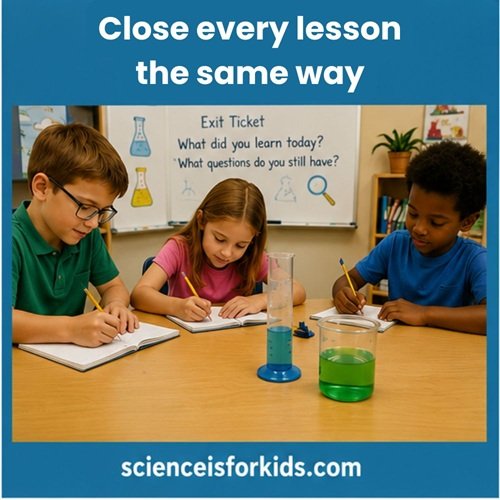
4) Close every lesson the same way.
A one-minute exit routine ties things up and let’s you know in an instant if your kids got the point of the lesson or now. You can use these techniques as part of your exit routine:
- turn and talk
- a single reflection question or exit ticket
- a thumbs up/down on understanding
- all response cards or boards
I promise that these one-minute exit routines are one of the science classroom routines you’ll find that help guide
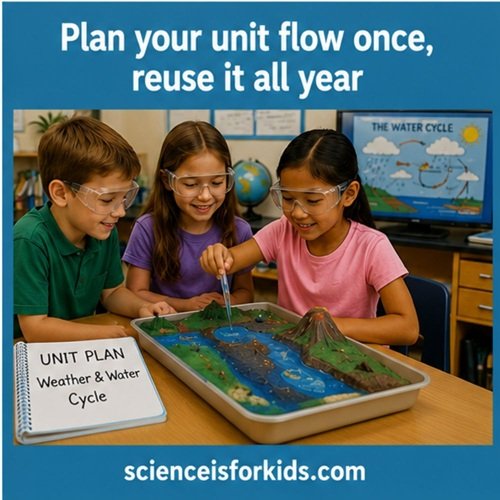
5) Plan your unit flow once, reuse it all year.
- Introduce
- Build vocabulary
- Hands-on practice
- Review game
- Assessment
Once this rhythm is set, you’re just swapping out the content, not reinventing your lesson structure every few weeks. Each unit then has consistent lesson routines throughout, and your kids will know what to expect because you’ve established your science classroom routines for predictable outcomes.
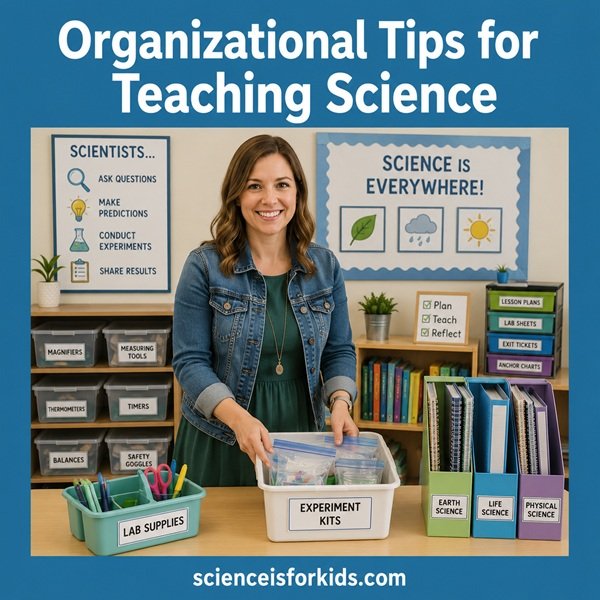
Organizational Tips for Teaching Science
Science classroom routines are not the only thing we need to establish. Science classrooms come with more “stuff” than most subjects including task cards, manipulatives, lab supplies, anchor charts, and digital resources. A few small organizational systems can make a big difference.
1) Sort by unit, not by material type.
Instead of a bin for markers and a bin for cards, keep everything for one unit together. Take your task cards, recording sheets, visuals, and answer keys and place them in a single labeled folder or bin. When it’s time to teach States of Matter, you grab one thing, not five.
2) Build a rotating supply cart.
If you teach multiple classes or grade levels, a small cart with the current unit’s materials means you’re never digging through a closet between periods. Swap it out unit by unit. If you are a classroom teacher, a supply cart with just your science materials on it works well too.
3) Go digital where you can.
Resources with a Google Slides or Boom Cards version cut down on paper clutter and prep time enormously. There’s no printing, laminating, or cutting apart task cards. If you want printables, save physical copies for the activities that really benefit from hands-on manipulation.
4) Keep an answer key binder.
One binder, tabbed by unit, holding every answer key you own. It sounds simple, but it eliminates the “where did I put that” hunt during grading. You might also include your answer keys in your unit binder as well just in case.
5) Label everything for future-you and for substitutes.
At the end of each unit, jot a sticky note on the bin with what worked, what to change, and how long it actually took. Next year’s you will be grateful. If a substitute is needed, science can be tricky. If things are clearly labeled, it helps them locate what they need.
My Favorite Science Units for Back to School
Now that you have a few ideas for routines and organization, I want to share with you some of my favorite units to start off the year. Having ready to go as you plan your year is a huge timesaver. Knowing that they’ve been used and tested out with many students over the year means even more. Each of these units is designed to fit right into the routines above, so there’s very little extra prep required.
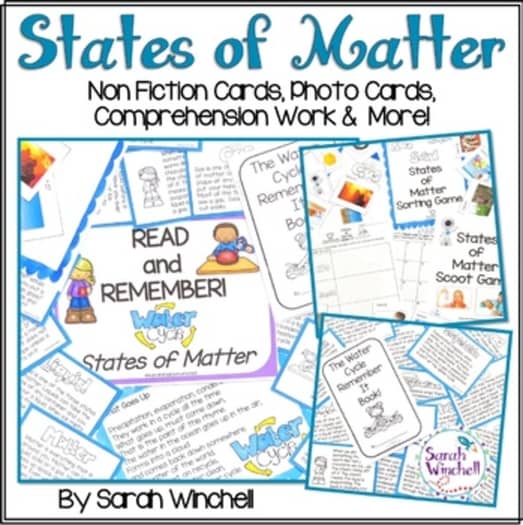
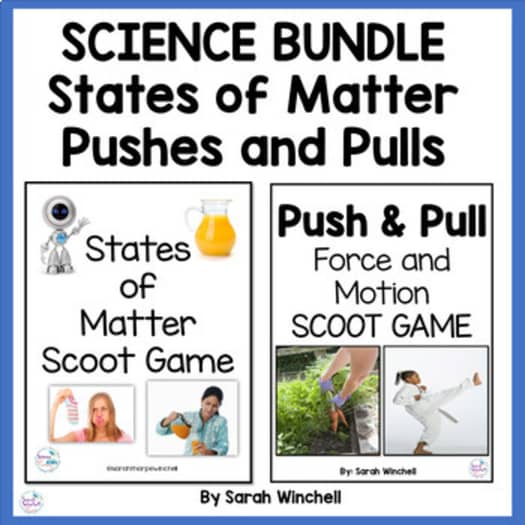
States of Matter is a natural unit to kick off the year with. Task cards, sorting activities, and an interactive PowerPoint game make it easy to teach solids, liquids, and gases with minimal prep, and the built-in scoot game doubles as your unit review.
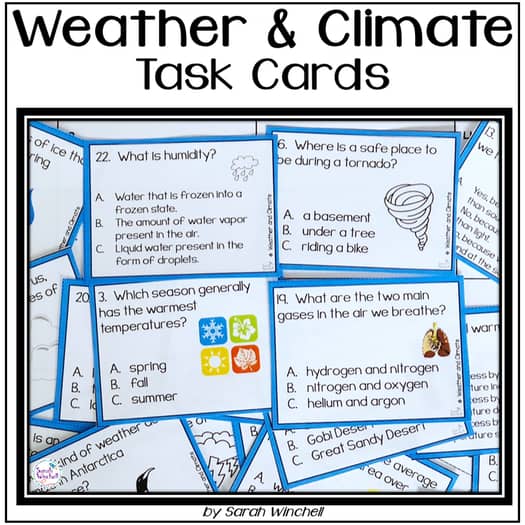
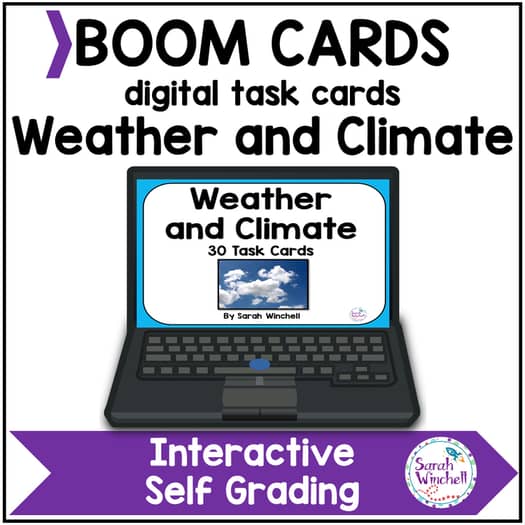
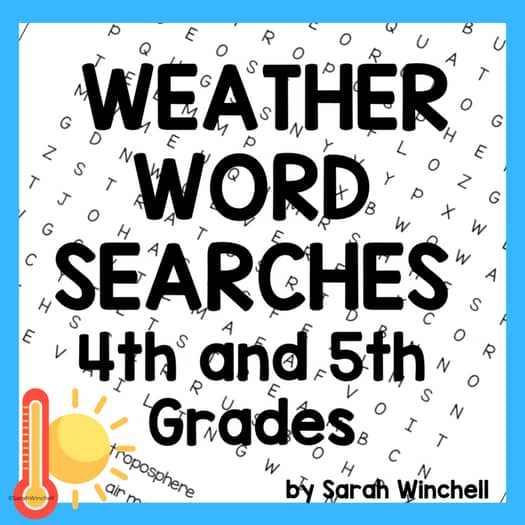
Weather and Climate resources make vocabulary-heavy content approachable, with digital Boom Cards and task card games that let students practice weather terms independently while you circulate and support.
Animal Habitats and Adaptations units bring in cross-curricular reading and writing practice alongside science content, so you’re reinforcing informational text skills at the same time you teach habitats, adaptations, and animal groups.


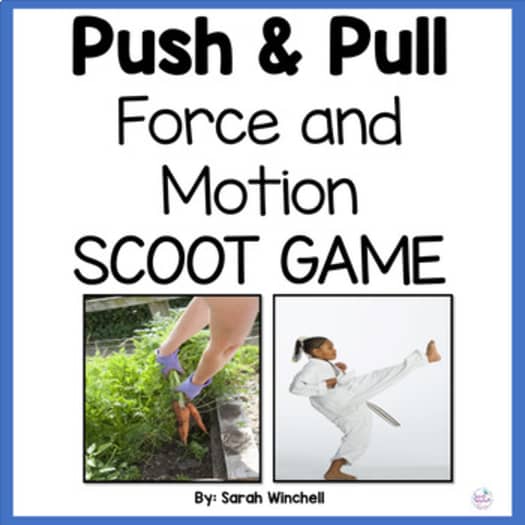
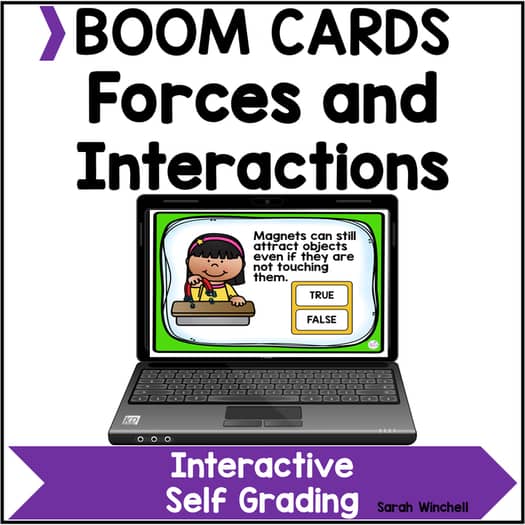
Forces and Motion (Pushes and Pulls) activities turn a sometimes-abstract topic into something concrete with real photographs and hands-on sorting, making it a great fit for a whole-group review or a quick partner activity.
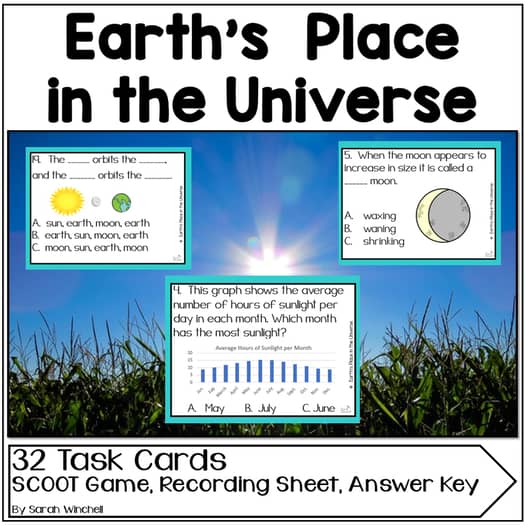
Earth’s Place in the Universe / Solar System task cards are ideal for wrapping up an earth science unit, They get students up and moving while reinforcing content, which is always a welcome change of pace after a content-heavy stretch.
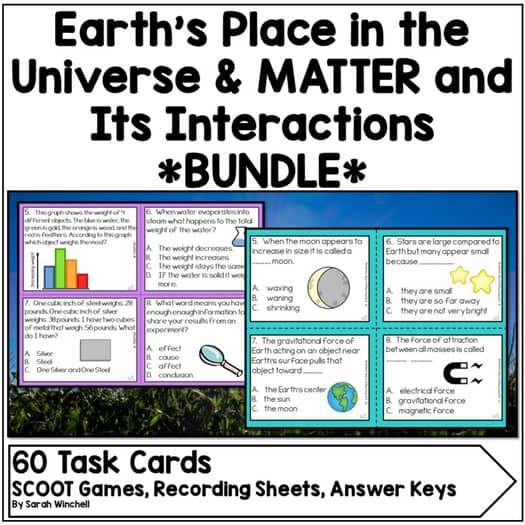
You can browse all of these units and more in the Science section of my TPT store. Everything is organized by grade level and topic, so it’s easy to find exactly what fits your unit plans for the year.
Other Science Posts You Might Review:
Interested in seeing what else is on the site? Check out these popular posts:
- Captivating Solar System Activities and Lessons Kids Love
- 7+ Powerful Ways to Teach States of Matter with Fun Games and Science Experiment
- Exciting and Engaging for Students: Ecosystems and Adaptations
Here’s to a smooth, well-organized start to the school year! Let me know if I can help!