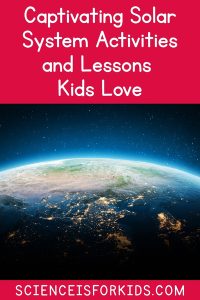
The solar system is one of the most exciting science topics for students. With the launch of the Artemis 2 recently and events like viewing the Northern Lights and eclipses, children are naturally curious about what exists beyond Earth. Teaching the solar system provides opportunities to build scientific knowledge, encourage critical thinking, and inspire wonder about space exploration.
In this post, you’ll find key vocabulary words, discussion questions, and hands-on activities that can help students better understand our fascinating solar system.
Which Concepts Should We Include with Our Solar System Unit?
The Core Next Generation Science Standards (NGSS) included with a solar system unit include:
- Observe and predict patterns of the sun, moon, and stars (e.g., sunrise/sunset times, day and night).
- Support arguments regarding apparent brightness of the sun versus other stars.
- Model Earth-Sun-Moon systems to explain shadows and seasons
- Understand Earth’s place in space
- Develop scientific observation and inquiry skills
- Explore concepts such as gravity and motion
- Connect science with technology and space exploration
- Build curiosity about astronomy and the universe
As you can see, there are many skills you can incorporate into your unit not to mention language arts integration.
Key Vocabulary Words to Include in your Solar System Unit:
Introduce and review these important terms throughout your unit:
- Solar System – The Sun and all objects that orbit around it.
- Sun – The star at the center of our solar system.
- Planet – A large object that orbits a star.
- Orbit – The path an object follows around another object in space.
- Moon – A natural satellite that orbits a planet.
- Asteroid – A rocky object that travels through space.
- Comet – An icy object that develops a glowing tail when near the Sun.
- Galaxy – A massive collection of stars, gas, dust, and planets.
- Gravity – The force that pulls objects toward one another.
- Rotation – The spinning of an object on its axis.
- Revolution – The movement of one object around another.
- Astronomy – The scientific study of space and celestial objects.
Discussion Questions You Might Use for your Solar System Unit
Use these questions to encourage inquiry and classroom conversation. You might use them as writing prompts or exit tickets related to your lessons.
Before Your Lesson or Unit:
- What do you already know about the solar system?
- Why do you think planets stay in space instead of falling?
- What questions do you have about outer space?
During the Unit:
- How are the planets similar and different?
- Why is Earth able to support life while other planets are not?
- What role does the sun play in our solar system?
- Why do some planets have many moons while others have few or none?
- How does gravity affect objects in space?
Higher-Order Thinking Questions:
- Which planet would you most like to visit and why?
- What challenges might humans face living on another planet?
- How would life on Earth change if the sun disappeared?
- Why is it important to continue exploring space?
- Do you think humans will ever live on another planet? Explain your reasoning.
Hands-On Activity Ideas to Teach about the Solar System
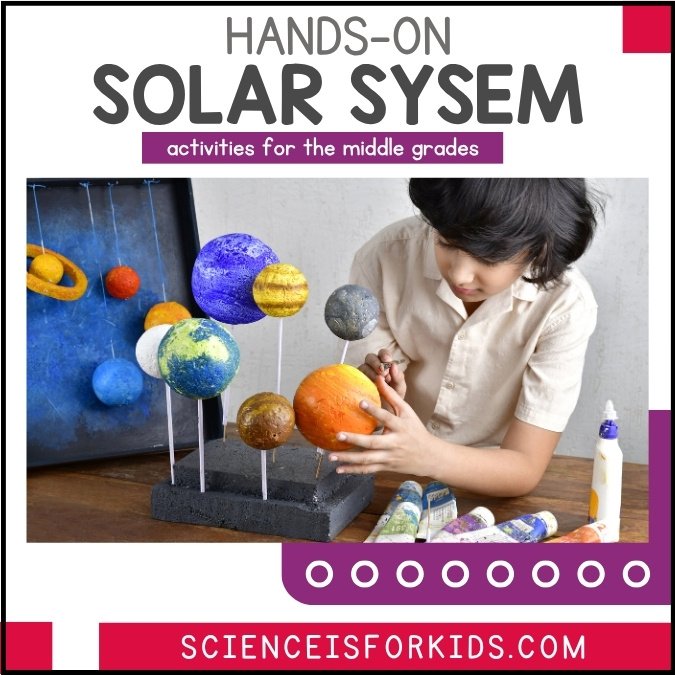
1. Create a Scale Model of the Solar System or a Diorama
Have students create a model showing the order of the planets. Depending on grade level, students can also investigate the relative sizes and distances between planets.
Materials:
- Styrofoam balls, clay, or paper circles
- Paint or markers
- String or measuring tape
- Posterboard for mounting or a dowel rod to create a mobile
2. Planet Research Project
Divide your students into small groups and assign each a planet to research. Students can investigate the following topics related to their assigned planet and present about their planet to the rest of the class:
- Size of the planet and how it compares to the others
- Temperature
- Moons
- Atmosphere
- Interesting facts
Have students create posters, slideshows, or digital presentations to share their findings.
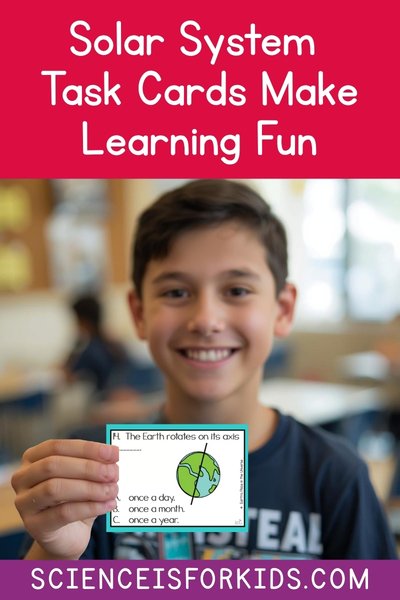
3. Solar System Task Cards for Scoot and other Review Games
These Earth’s Place in the Universe task cards will help you teach your students the science concepts they need to know! The resource includes graphs for your students to read. Here are the concepts addressed in the resource:
- Gravity and gravitational forces
- Earth, moon, sun, and stars
- Rotation and Revolution of the Earth, moon, and sun
- Axis, rotation of the axis
- Patterns
- Relative sizes of the Earth, moon, and sun
- Constellation, waxing and waning moon
- Cause, effect, scale, proportion, and quantity
- Sun, Moon and stars
Even if you haven’t covered every concept it is an opportunity to improve the science vocabulary of your students. This resource can also work as an assessment.
4. Edible Solar System
Students can build a solar system using snacks such as crackers, cookies, cereal, or fruit. This activity combines science learning with creativity and engagement.
5. Planet Trading Cards
Have your students design trading cards featuring:
- Planet name
- Picture
- Key facts
- Fun statistics
These can be shared and collected throughout the unit.
6. Gravity Demonstration
Use simple classroom demonstrations to explore gravity and to model key vocabulary. You might try a few of these ideas:
- Dropping objects of different sizes and weights (hammer vs feather)
- Rolling balls down ramps
- Comparing motion on different surfaces
Discuss how gravity affects planets, moons, and astronauts. You can have students brainstorm in teams about ways we see gravity at work all around us. For a full free lesson on gravity, check out this link on PBS. It includes two video links as well as a step by step lesson you and your students might enjoy.
Cross-Curricular Connections
Reading and Writing
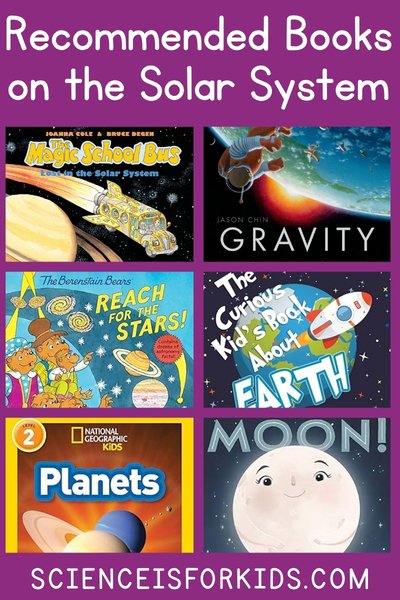
- Read nonfiction books about the planets, the moon, Earth, concepts such as rotation and revolution, and space exploration.
- Write journal entries related to the topics you are teaching. You might use the question prompts provided or topics related to the books you share.
- Create informational brochures about each of the planets.
Mathematics
Math integrates well with science. Here are just a few examples of ways you can work in math skills.
- Compare planet sizes using graphs.
- Calculate distances between planets.
- Practice measurement skills with scale models.
Art
- Create planet paintings and 3-D models.
- Design spacecraft replicas from recent missions.
Fun Card Game for Learning More About the Solar System:
This is fun game for all ages that can be modified for student’s ages and abilities! Astronauts: The Ultimate Space Game can be part of your Solar System Unit of Study. (affiliate link-see disclosure at the end of this post) Please click the link above or if you click on the book cover please click “go to store”. This game is an award winner!
Other Posts You Might Like:
- 7+ Powerful Ways to Teach States of Matter with Fun Games and Science Experiment
- States of Matter? Make it Fun for Students with a Game They Will Love!
- Easy Classroom Activity for Learning about Forces and Motion: Push and Pull Relay Drawings
Final Thoughts
The solar system offers endless opportunities for discovery and imagination. By combining vocabulary development, meaningful discussions, and hands-on activities, you can help your students develop a deeper understanding of space while also fostering curiosity about the world beyond our planet. Whether your students are building models, researching planets, or imagining future space missions, solar system lessons can create memorable learning experiences that inspire lifelong interest in space and astronomy.
This post may contain Amazon affiliate links. As an Amazon Associate, I earn from qualifying purchases at no additional cost to you. Thank you for supporting Science is for Kids.